
When the body is injured, damaged tissues should receive sufficient oxygen in order to get repaired and recover. Most minor injuries heal in roughly 4 weeks, although healing time varies depending on the type and severity of the injury. If wound healing does not progress at a normal pace or the wound remains chronic, then the healing process may take 4 to 8 weeks or longer, especially when the oxygen supply is low.
Hyperbaric oxygen therapy involves breathing medical-grade oxygen in a pressurized environment. HBOT increases the amount of oxygen available to damaged tissues, which can support the body’s healing process. This can support the formation of new cells and blood vessels.
Sometimes HBOT may be prescribed as part of a treatment plan for certain medical conditions. Depending on the condition being treated, HBOT may support tissue healing and recovery. In other words, hyperbaric therapy supports the body’s natural healing process.
How does a Hyperbaric Oxygen Therapy Chamber Work?
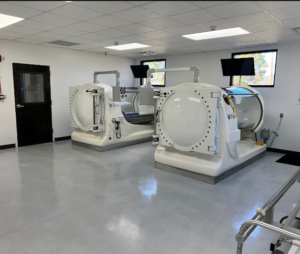
Hyperbaric oxygen therapy chambers essentially work by increasing the air pressure inside the chamber above normal atmospheric pressure levels. The patient breathes medical-grade oxygen while the HBOT chamber pressure is increased, allowing more oxygen to dissolve into the blood and reach the body’s tissues.
In a hyperbaric environment, oxygen molecules are under higher pressure. The increased pressure allows more oxygen to dissolve into the blood and reach areas that need it. Damaged tissues, including muscles, organs, and bones, can receive more oxygen during HBOT. Besides the immediate effect of providing more oxygen, such high oxygen conditions also allow for the release of stored oxygen from hemoglobin to the tissues. The additional oxygen availability enables the body’s natural healing mechanisms to work better, in particular with slow-healing and chronic wounds that have not adequately responded to regular treatment.
Oxygen is also important in the body’s fight against infections, as oxygen in the blood helps white blood cells work more efficiently. When injured parts of the body are given enough oxygen through hyperbaric treatment, oxygen can assist the recovery mechanisms of tissues and lead to wound healing at a faster rate. Hyperbaric therapy significantly improves oxygen delivery to damaged body parts and strengthens the body’s ability to fight infections and repair tissue.
What is the hyperbaric oxygen therapy procedure?
First of all, before the hyperbaric oxygen treatment, the patient’s medical record will be examined, and a detailed assessment will be carried out of their present status and symptoms. This is to find out whether hyperbaric chamber therapy will be beneficial for the patient. After that, the physician will devise a treatment program based on the particular patient’s requirements that includes, to name just a couple of factors, the pressure level and length of each treatment session.
- The physician explains the treatment procedures and what to expect during the session.
- Then the patient puts on the gown given to them by the clinic.
- Now the patient lies on the bed, getting ready for therapy in the hyperbaric oxygen therapy chamber.
- Then that bed slides inside the tube of that machine.
- During this, the pressure rises gradually while the patient breathes pure oxygen.
- In fact, the HBOT technician is present, and he is observing the patient to monitor the patient and help manage any discomfort caused by pressure changes.
- Inside the HBOT chamber, patients breathe medical-grade oxygen according to the treatment protocol.
- The patient can choose to pass the time as per the rules of the clinic and HBOT chamber, like reading a book, listening to music, watching movies, or even using a mobile phone during the hyperbaric chamber therapy.
- The patient is able to talk to the medical team at any time if they feel uncomfortable or need the team’s help.
- A typical treatment session is one and a half to two hours and may change based on a treatment plan.
- After the session, the pressure inside the hyperbaric oxygen therapy chamber is gradually reduced to normal atmospheric pressure.
- The bed is then slowly moved out of the HBOT chamber.
- According to the patient’s treatment plan, the doctor will schedule the next session. Then the patient will change clothes and go home if the medical team allows it
How often should hyperbaric oxygen therapy be done?
The number of hyperbaric oxygen therapy sessions required for each individual varies depending on the disease and severity of the condition. The number and frequency of HBOT sessions vary depending on the condition being treated, its severity, and the patient’s response to treatment. A hyperbaric physician will determine the appropriate treatment schedule, including the duration and number of sessions, based on the patient’s individual needs. Typically, the hyperbaric physician will determine the number of treatment sessions based on the patient’s state of health, purposes, and personal requirements.
Conclusion
Hyperbaric Chamber therapy is a medical treatment for helping the body get more oxygen while also supporting the recovery of damaged tissues. It can be a good treatment option for slow-healing wounds, major injuries, and specific medical conditions. The doctor decides the number of treatment sessions based on the patient’s disease and treatment plan. The medical professional will assess the patient’s health before HBOT to determine that the patient is suitable and the treatment can be safely administered. Medical staff will also be supervising the patient during the entire session to ensure their safety and comfort.
Frequently Asked Questions About Hyperbaric Oxygen Therapy
Question No 1. How long does a hyperbaric oxygen therapy session take?
In most cases, an HBO therapy session will take around 90 minutes. The length of the session depends on the patient’s condition, treatment plan, and the medical team’s recommendations.
Question No 2. Is hyperbaric oxygen therapy painful?
Hyperbaric oxygen therapy doesn’t usually cause pain. Some people may experience ear discomfort due to pressure changes during the first 30 minutes.
Question No 3. What are different side effects of HBOT?
Some of the individuals might suffer from ear pressure, buzzing ears, discomfort in one’s sinus cavity, and temporary alterations in eyesight. On other occasions, very rare side effects that are life-threatening, such as oxygen toxicity, could be encountered. Even so, it is quite rare. The physician would closely check his/her patient during and after the treatment.
Question No 4. Is HBOT a replacement for regular medical treatment?
HBOT has a more supportive role in the treatment plan and can hardly be regarded as a treatment in itself that is sufficient alone. The physician will decide if HBOT should be part of the combination therapies.