
Hyperbaric oxygen therapy (HBOT) is a medical treatment in which a patient breathes prescribed medical-grade oxygen at increased atmospheric pressure. However, not all hyperbaric chambers or hyperbaric services are the same.
There are important differences between medical-grade HBOT and mild/soft hyperbaric therapy, including treatment pressure, oxygen delivery, chamber type, medical supervision, and the purpose of treatment.
What Is Medical-Grade HBOT?
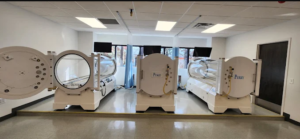
Medical-grade hyperbaric oxygen therapy (HBOT) is a physician-supervised medical treatment in which a patient breathes prescribed medical-grade oxygen inside a hyperbaric chamber at increased atmospheric pressure.
At TenMed Wound Care & Hyperbaric Medicine, physician-supervised HBOT is delivered at 2.0 ATA or higher. ATA, or atmospheres absolute, is a measurement of pressure within the chamber. Increased atmospheric pressure allows more oxygen to dissolve into the blood and become available to the body’s tissues.
Medical-grade HBOT is used to treat certain medical conditions according to established treatment protocols and the patient’s prescribed treatment plan.
Before receiving HBOT, patients undergo a medical evaluation to determine whether they are appropriate candidates for treatment.
What Makes Medical-Grade HBOT Different?
Medical-grade HBOT differs from mild/soft hyperbaric therapy in several important ways, including treatment pressure, chamber type, oxygen delivery, medical oversight, and intended use.
Treatment pressure, the number of sessions, and the duration of treatment are determined based on the patient’s medical condition and prescribed treatment plan. Patients are monitored by medical staff throughout treatment.
For wound patients, medical-grade HBOT may be used in conjunction with appropriate wound management and other treatments as needed. HBOT is one component of an overall treatment plan and does not replace routine medical or wound care.
Are HBOT Chambers FDA-Cleared?
Yes. Hyperbaric chambers used for HBOT are Class II medical devices cleared by the U.S. Food and Drug Administration (FDA) through the 510(k) process.
FDA clearance of a hyperbaric chamber does not mean that HBOT is appropriate for every medical condition or every patient. Individual devices have specific indications for use.
If you are considering medical-grade HBOT for a medical condition, a physician can evaluate your condition and determine whether treatment may be appropriate for you.
What Is Mild/Soft Hyperbaric Therapy?
Mild/soft hyperbaric therapy generally uses lower pressure than medical-grade HBOT. A commonly used pressure for mild hyperbaric systems is about 1.3 ATA.
These systems are often used or marketed for wellness, recovery, or other non-medical purposes. Chamber type, oxygen concentration, treatment plans, and the level of medical supervision can vary by provider.
Mild/soft hyperbaric therapy should not automatically be considered equivalent to medical-grade HBOT. Lower-pressure systems differ from the medical chambers and treatment protocols used for established medical indications.
If you are considering hyperbaric treatment for a medical condition, ask the provider:
- What pressure does the chamber use?
- What type of chamber is used?
- What concentration of oxygen is provided?
- Is a physician involved in my treatment?
- Will hyperbaric treatment be part of a comprehensive medical care plan?
These questions can help you better understand the type of hyperbaric service being provided.
Medical-Grade HBOT vs. Mild/Soft Hyperbaric Therapy
| Feature | Medical-Grade HBOT | Mild/Soft Hyperbaric Therapy |
| Treatment pressure | Often around 2.0 ATA or higher, depending on the medical treatment plan | Commonly around 1.3 ATA |
| Main purpose | Used for specific medical conditions | Generally used or marketed for wellness or recovery |
| Physician supervision | Physician-supervised medical treatment | Level of medical supervision can vary |
| Chamber type | Medical hyperbaric chamber | Mild/soft hyperbaric chamber |
| Patient evaluation | Medical evaluation is part of treatment | Depends on the provider |
| Treatment plan | Based on the patient’s medical condition | Often based on wellness or general-use plans |
| Wound care | May be used for certain qualifying medical conditions | Not equivalent to medical-grade HBOT for established wound indications |
| Insurance coverage | May be covered for certain qualifying medical conditions, depending on the insurance plan | Coverage varies; patients should verify benefits with their insurance provider |
| Monitoring | Patient is monitored according to the medical treatment plan | Monitoring can vary by facility |
| Treatment setting | Medical facility or treatment center | May be offered in wellness or recovery settings |
The exact pressure and treatment plan can vary based on the medical condition and equipment being used.
Why Wound Patients May Need Medical-Grade HBOT
Certain wounds may be slow to heal due to factors such as inadequate blood flow, infection, tissue damage, diabetes, reduced oxygen availability, or other underlying health conditions.
When medical-grade HBOT is recommended, it is typically used as an adjunctive treatment, meaning it is used alongside appropriate wound care rather than as a substitute for it. Depending on the patient’s condition, the overall wound care plan may include:
- Evaluating the wound
- Removing damaged tissue when needed
- Treating infection when present
- Evaluating blood flow
- Relieving pressure on the wound
- Managing blood sugar when appropriate
- Providing nutritional support
- Using appropriate medications or other medical treatments
A physician can evaluate the wound and determine whether medical-grade HBOT may be appropriate.
Why Physician Supervision Matters
Medical-grade HBOT involves more than simply entering a hyperbaric chamber. A physician evaluates the patient’s condition, medical history, medications, and other relevant health factors to determine whether treatment is appropriate.
If HBOT is recommended, the medical team follows the prescribed treatment plan and monitors the patient throughout treatment.
Why Treatment Pressure Matters
Treatment pressure is an important distinction between medical-grade HBOT and mild/soft hyperbaric therapy.
Normal atmospheric pressure at sea level is approximately 1 ATA. At TenMed, physician-supervised HBOT is delivered at 2.0 ATA or higher, depending on the medical condition and treatment plan. Mild/soft hyperbaric systems typically operate at lower pressures, such as approximately 1.3 ATA.
Pressure, however, is only one component of treatment. Chamber type, oxygen concentration, treatment duration, medical supervision, the patient’s condition, and the overall treatment plan must also be considered.
What Happens During Medical-Grade HBOT?
A typical treatment may include:
- The patient enters the hyperbaric chamber.
- The chamber is gradually pressurized to the prescribed treatment pressure.
- The patient breathes oxygen according to the prescribed treatment plan.
- The medical team monitors the patient during treatment.
- At the end of treatment, the chamber is gradually returned to normal atmospheric pressure.
The number of sessions and duration of each session depend on the patient’s medical condition and treatment plan.
At TenMed: Physician-Supervised Medical-Grade HBOT
TenMed Wound Care & Hyperbaric Medicine provides medical-grade HBOT under physician supervision as part of a comprehensive medical care plan.
For patients with wounds, HBOT may be used alongside other wound care treatments. Treatment is based on the patient’s condition, treatment needs, and overall care plan.
Who May Be a Candidate for Medical-Grade HBOT?
Not every wound or medical condition is appropriate for HBOT, and not every patient is a candidate.
A physician may consider factors such as:
- The patient’s diagnosis
- The nature and extent of the wound
- How long the wound has been present
- How the wound has responded to standard care
- Blood flow and oxygen delivery to the tissues
- Infection or other health concerns
- The patient’s medical history
- Other treatments the patient is currently receiving
- Whether the condition is an accepted indication for HBOT
The best way to determine whether medical-grade HBOT may be appropriate is through a medical evaluation.
Frequently Asked Questions
Question 1. What Is Medical-Grade HBOT?
Medical-grade HBOT is a physician-supervised medical therapy that uses a medical hyperbaric chamber to deliver prescribed medical-grade oxygen at increased atmospheric pressure. At TenMed, physician-supervised HBOT is delivered at 2.0 ATA or higher.
Question 2. What Is Mild/Soft Hyperbaric Therapy?
Mild/soft hyperbaric therapy generally uses lower pressure, commonly around 1.3 ATA. These systems are often marketed for wellness or recovery and should not automatically be considered equivalent to medical-grade HBOT.
Question 3. What Is 2.0 ATA?
ATA stands for atmospheres absolute, a measurement of pressure. A treatment at 2.0 ATA is delivered at approximately twice normal atmospheric pressure at sea level. The appropriate treatment pressure depends on the medical condition and prescribed treatment plan.
Question 4. What Does 1.3 ATA Mean?
Normal atmospheric pressure at sea level is approximately 1 ATA. A chamber operating at 1.3 ATA is pressurized to approximately 30% above normal atmospheric pressure. This pressure is commonly associated with mild/soft hyperbaric systems.
Question 5. Is Mild/Soft Hyperbaric Therapy the Same as Medical-Grade HBOT?
No. They can differ in treatment pressure, chamber type, oxygen delivery, treatment protocols, medical supervision, and intended purpose.
Question 6. Can Mild/Soft Hyperbaric Therapy Be Used to Heal Wounds?
Mild/soft hyperbaric therapy is not equivalent to medical-grade HBOT. Patients with wounds should receive an appropriate medical evaluation to determine which treatments are suitable for their condition.
Question 7. Are HBOT Chambers FDA-Cleared?
Yes. Hyperbaric chambers used for HBOT are Class II medical devices cleared by the FDA through the 510(k) process. Whether HBOT is appropriate depends on the patient’s medical condition and other clinical factors.
Question 8. Does Medical-Grade HBOT Require Physician Supervision?
Medical-grade HBOT is delivered with appropriate clinical oversight. At TenMed, HBOT is physician-supervised.
Question 9. Does Insurance Cover Medical-Grade HBOT?
Some insurance plans may cover medically necessary HBOT when the patient’s condition and treatment meet the plan’s coverage criteria. Coverage varies by insurance plan, so patients should verify their individual benefits and coverage requirements.
Question 10. How Long Is a Medical-Grade HBOT Session?
Treatment time depends on the medical condition and prescribed treatment plan. A session also includes time for the chamber to gradually reach the prescribed pressure and return to normal atmospheric pressure.
Question 11. How Many HBOT Sessions Will I Need?
There is no single number of sessions that applies to every patient. The number of treatments depends on the medical condition, treatment plan, response to treatment, and physician’s evaluation.
Question 12. Does Medical-Grade HBOT Replace Routine Wound Care?
No. When HBOT is indicated for a wound, it is generally used in conjunction with comprehensive wound care.
Question 13. What Is the Role of Medical-Grade HBOT in Wound Treatment?
HBOT increases the amount of oxygen available to the body’s tissues under hyperbaric conditions. When medically appropriate, it may be included as part of a comprehensive treatment plan for certain conditions.
Question 14. How Can I Tell if I Need Medical-Grade HBOT or Mild/Soft Hyperbaric Therapy?
If you are considering hyperbaric treatment for a wound or another medical condition, begin with a medical evaluation. A physician can assess your condition and determine whether medical-grade HBOT may be appropriate.
Question 15. Where Can I Receive Physician-Supervised HBOT for a Wound?
TenMed Wound Care & Hyperbaric Medicine provides physician-supervised HBOT for appropriate patients. If you have a chronic or difficult-to-heal wound, contact TenMed to determine whether a wound care and hyperbaric evaluation may be appropriate for you.