
There are several reasons vascular wounds on the legs can be difficult to heal, such as poor circulation. Leg wounds that are due to circulation problems are known as vascular wounds. Vascular wounds require special care, especially when they remain open for a long time, are very painful, or show signs of infection.
The team at TenMed Wound Care & Hyperbaric Medicine treats various types of wounds. Leg wounds that do not heal may indicate a more serious underlying issue that the right diagnosis and treatment will solve.
What Are Vascular Wounds on Legs?
Vascular wounds on the legs are those caused by poor blood circulation in the legs. Blood flow is a vital factor in wound healing, as blood supplies oxygen and nutrients that are essential for the healing of skin and other tissues.
If the blood circulates poorly, the wound will not get enough oxygen and nutrients, and so the wound may heal slowly. Vascular wounds on legs can result from problems with both the arterial and venous blood vessels. A medical professional will be able to evaluate the wound and determine the underlying cause.
What Do Vascular Wounds on Legs Look Like?
Vascular wounds can look different from person to person. They may appear as open sores that do not heal as expected.
You may also notice swelling, skin color changes, dry skin, or pain near the wound. Some wounds may have fluid or drainage.
If a wound stays open for a long time, becomes worse, or starts causing more pain, it should be checked by a healthcare professional.
What Are the Signs of a Vascular Wound?
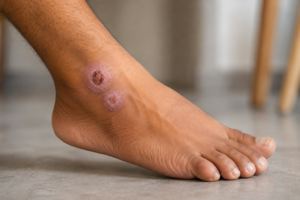
Common signs of a vascular wound may include:
- A wound that does not heal properly
- Pain around the wound
- Swelling in the leg or foot
- Changes in skin colour
- Redness around the wound
- Skin that feels warm
- Fluid or drainage from the wound
- Severe pain
- Skin is pale or blue
- The affected leg or foot feels cold
Talk to a healthcare professional if you notice these signs. Diagnosis and timely management help not only locate the cause of injury but also prevent the wound from deteriorating.
Why Do Vascular Wounds Take Longer to Heal?
If blood flow is poor, wound healing cannot be delayed. The blood transports oxygen and nutrients to the tissues for healing and repair. With an inadequate blood supply, less oxygen and fewer nutrients may reach the wound. The healing process may be slower. So, special wound care must be provided for vascular wounds on the leg. If there is poor blood flow, wound treatment alone may not be sufficient.
How Are Vascular Wounds on Legs Treated?
The treatment depends on the type and severity of the wound.
- A nurse or doctor will examine the wound and check the blood flow in your leg.
- Treatment could consist of cleaning the wound, using the right dressing, and protecting the wound.
- In case the blood flow problem is the main reason, then you may receive treatment for this issue.
- If the wound becomes infected, you may receive treatment to control it.
- Some patients may require additional wound management. If your doctor thinks it may help, HBOT can be considered for some wounds.
- During HBOT, you breathe oxygen in a special chamber where the air pressure is higher than normal
- HBOT can potentially assist in the healing process for certain wounds.
- Not all vascular wounds will require HBOT; your doctor will determine whether or not it is appropriate for you.
How Can You Care for a Vascular Wound?
- Care for the wound as instructed by your doctor.
- Follow instructions given by your doctor to keep the wound clean and protected.
- Use the dressing recommended by your medical team.
- Do not put any creams, medicines, or other products on the wound unless your doctor has asked you to.
- Follow-up appointments as scheduled: it’s important to keep all follow-up appointments so that your doctor can see how the wound is healing.
- Follow your doctor’s instructions if you have diabetes or any blood flow problems.
Get Wound Care at TenMed Wound Care & Hyperbaric Medicine
Vascular wounds of the legs can be difficult to heal when poor blood flow is involved. Finding the right medical care can identify the cause and develop a treatment plan that’s right for you.
TenMed Wound Care & Hyperbaric Medicine provides expert care for chronic and difficult-to-heal wounds. We can evaluate vascular wounds on legs that are not healing in the way that we would expect and discuss treatment options. If you have a painful or open wound that is not healing or not healing normally, call TenMed Wound Care & Hyperbaric Medicine for a wound evaluation.
Frequently Asked Questions
Question No 1. What are the vascular leg wounds?
Vascular wounds are wounds associated with problems in blood flow. When blood doesn’t flow well, the body is not as able to heal a wound.
Question No 2. Why do wounds in vascular tissue heal slower?
Blood flow may be reduced, and fewer oxygen and nutrients may get to the wound. This can also slow the body’s natural healing process.
Question No 3. What are common signs of a vascular wound?
Common signs may include: an open wound that doesn’t heal, pain, swelling, changes in skin color, redness, or fluid from the wound.
Question No 4. When should I see a doctor if my wound won’t heal?
Yes. If you have diabetes or circulation problems, or if you have a wound that does not heal normally or stays open, see a health care provider.
Question No 5. Is Hyperbaric Oxygen Therapy beneficial for vascular wounds?
HBOT can be used to treat some wound conditions. But it’s not good for every wound. It’s up to a health care professional to determine if it’s right for you.
Question No 6. Where to get treatment for vascular wounds on the legs?
TenMed Wound Care & Hyperbaric Medicine is a specialty care provider for chronic and hard-to-heal wounds. Talk to your team to learn more about your treatment options.