
Traumatic wounds present unique clinical challenges, but when a patient has a chronic illness like diabetes, these challenges become more complex. For individuals with diabetes, a minor scrape, puncture wound, or sudden laceration cannot be treated as a simple injury. Without rapid, targeted intervention, traumatic wounds can easily transition into chronic, non-healing ulcers, leading to severe complications like deep tissue infections, osteomyelitis, or even amputation.
Managing a traumatic wound when you have diabetes requires deep and metabolic care.
What are the symptoms of a diabetic traumatic wound getting worse?
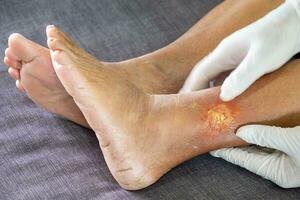
It’s important to recognize early signs of a diabetic wound that won’t heal properly or one that will develop long-term complications. Healthy tissue heals steadily and predictably over time, while a diabetic wound may show little or no progress, or may continue to worsen. You should examine the injury closely for any of the following signs at or near the site:
- No Pain Initially: A person with diabetes may have a cut or scrape but, because of peripheral neuropathy, may feel little or no pain at the site, which makes the situation even worse.
- Persistent Redness and Swelling: Redness and swelling progressing outward from the wound instead of receding over the subsequent few days.
- Increased Temperature of the Area: Skin surrounding the injury feels overly warm to the touch.
- Unexpected or Unpleasant Drainage: Clear, yellowish fluid or thick, green, pus-like fluid draining from the wound.
- Delayed Progress with Healing: An injury that remains open, appears unchanged, or expands in size after forty-eight to seventy-two hours.
- Darkening of Adjacent Tissue: The edges and base of the wound become dark brown, dark purple, or black, which indicates necrotic (dead) tissue.
What are the possible causes of a worsening diabetic traumatic wound?
The body’s normal ability for cellular repair is impacted by the physiological effects of diabetes. Understanding these mechanisms explains why diabetic wounds need special treatment:
Decreased Blood Supply to the Wound (Ischemia): Increased blood glucose levels cause blood vessels to narrow and harden; therefore, limited blood flow means that oxygen, important nutrients, and natural growth factors cannot reach the wound as needed to heal the tissue back to normal.
Impaired Immune System Function: The chronic elevation of blood sugar levels suppresses the function of white blood cells (neutrophils and macrophages); with reduced white blood cell activity, there is an increased risk of infection (from rapidly spreading bacteria filling the open wound) and biofilm formation on the wound.
Diabetic Neuropathy: Diabetics have nerve damage in the lower sections of the body, affecting their ability to feel pain; therefore, many patients miss the initial traumatic event, delaying their ability to receive timely first aid.
Reduced Collagen Production: Diabetes affects the body’s ability to produce collagen, the primary component of connective tissue that helps heal an open wound.
When should you see a doctor?
There is no such thing as a minor traumatic wound with diabetes. Delays in professional assessment will cause rapid tissue deterioration. If you notice any of the following, you should seek immediate medical attention:
- Little or No Improvement in 48 Hours: The wound shows no closure, drying, or improvement within two days.
- Evidence of Active Infection: Red streaks (lymphangitis) on the limb, increasing pain, increasing redness or swelling, or foul-smelling drainage.
- Deep or Jagged Wounds: Puncture wounds (especially if you stepped on something), deep lacerations, or injuries that expose fat, muscle, or bone.
- Systemic Symptoms: Fever, chills, nausea, or sudden, unexplained fluctuations in daily blood glucose levels.
- Location of the Wound: Any traumatic injury to the plantar side of the feet, toes, heels, or ankles requires immediate clinical evaluation.
What are the treatment options?
Managing a diabetic traumatic wound requires an advanced clinical approach. Treatment options for a diabetic traumatic wound include:
Advanced Wound Debridement: In advanced wound debridement, dead, necrotic, and infected tissues are removed with clinical tools. This process removes cellular debris, prevents bacterial growth, and exposes clean tissue to promote the cellular healing process.
Strategic Off-Loading: This is a strategic approach to taking the load off the wound. If you keep stepping on an injury, the constant pressure and friction will repeatedly crush new cells and tear the skin again. Because diabetes reduces sensation in the injured area, you might not even realize how much damage your daily steps are causing. For this reason, specialized tools such as customized walking boots, total contact casts, or crutches are used to redirect weight away from the injury site.
Hyperbaric Oxygen Therapy (HBOT): This process is similar to a highly concentrated energy boost for skin cells. Normal skin tissue needs oxygen to heal and regenerate, while the constricted blood vessels caused by diabetes deprive it of this important resource. During an HBOT treatment session, the patient breathes 100% pure oxygen in a pressurized chamber, which increases the concentration of oxygen in the blood. This allows oxygen-rich blood to reach the wound site, helping accelerate the healing process and kill harmful bacteria.
Negative Pressure Wound Therapy: This treatment is an advanced, vacuum-assisted option that uses a gentle, continuous suction device over a specialized foam dressing. Because diabetes can cause excess fluid and swelling that trap bacteria and stall healing, this vacuum pump actively draws away fluid and drainage from the wound’s surface. At the same time, the gentle pulling motion physically draws the edges of the wound closer together and encourages fresh, healthy tissue to fill the gap.
UltraMIST Therapy: This advanced therapy is entirely painless, as it utilizes low-frequency acoustic waves delivered through a fine mist. Diabetes makes body cells sluggish, and the healing process remains stagnant due to thick bacterial films present at the injury site. The painless energy of UltraMIST travels beneath the surface of the wound without direct contact with the injured skin. It helps eliminate bacteria and microscopic debris and stimulates sluggish blood vessels to supply fresh blood to the wounded area.
How does TenMed Wound Care & Hyperbaric Medicine help treat this condition?
At TenMed Wound Care & Hyperbaric Medicine, we use advanced, cutting-edge technologies that are highly effective for treating diabetic traumatic wounds. We know that a wound cannot heal from the outside if your body is struggling on the inside. First, we carefully evaluate the wound and its condition. After understanding the cause, we focus on treating the wound with the approach that best suits your condition.
Book an appointment with us today!
Conclusion: Managing diabetes means that minor injuries such as bumps, scrapes, and cuts are never simple for you. Changes in blood flow, nerve signaling, and immune function mean that if a wound goes untreated, it can quickly become a serious medical emergency. However, you do not have to go through this process alone. By keeping a close watch on your skin, acting promptly when something looks abnormal, and finding specialists who understand metabolic treatment options, you will be able to effectively and safely care for your skin and your lifestyle.
FAQs: Frequently Asked Questions
Question 1. What should I do if I notice a wound but don’t feel any pain at all?
Answer: Even though there is no pain, you must take appropriate action immediately, because the lack of sensation is a typical sign of nerve damage from neuropathy. This condition often makes the injury seem less serious than it actually is.
Question 2. How can I prevent diabetic foot wounds?
Answer: To prevent diabetic foot wounds, follow these preventative tips:
- Check your feet daily.
- Never walk barefoot.
- Keep your skin moisturized.
- Trim your toenails carefully.
- Manage your blood sugar.
Question 3. Is it safe to let a diabetic wound “air out” or scab over naturally?
Answer: No, letting a diabetic wound dry out or form a rough scab actually slows recovery. New skin cells need a moist environment to travel across the injury and close it. Leaving the area exposed also leaves it completely unprotected against airborne bacteria and dangerous infections.
Question 4. Why does my traumatic wound look clean but still isn’t getting any smaller?
Answer: This usually happens because high blood sugar acts like a traffic jam inside the body, narrowing blood vessels and keeping vital oxygen from reaching the injury. Even if the surface looks clean, the cells remain sluggish and stuck in a non-healing phase, which is why advanced treatments like HBOT or UltraMIST are needed to restore circulation.
Question 5. Can I use over-the-counter rubbing alcohol or hydrogen peroxide on my cut?
Answer: You should strictly avoid rubbing alcohol, hydrogen peroxide, and iodine on a diabetic wound. While they do kill bacteria, they are too harsh and destroy the delicate new cells trying to rebuild the skin. It is much safer to clean the area gently with mild soap and lukewarm water.